

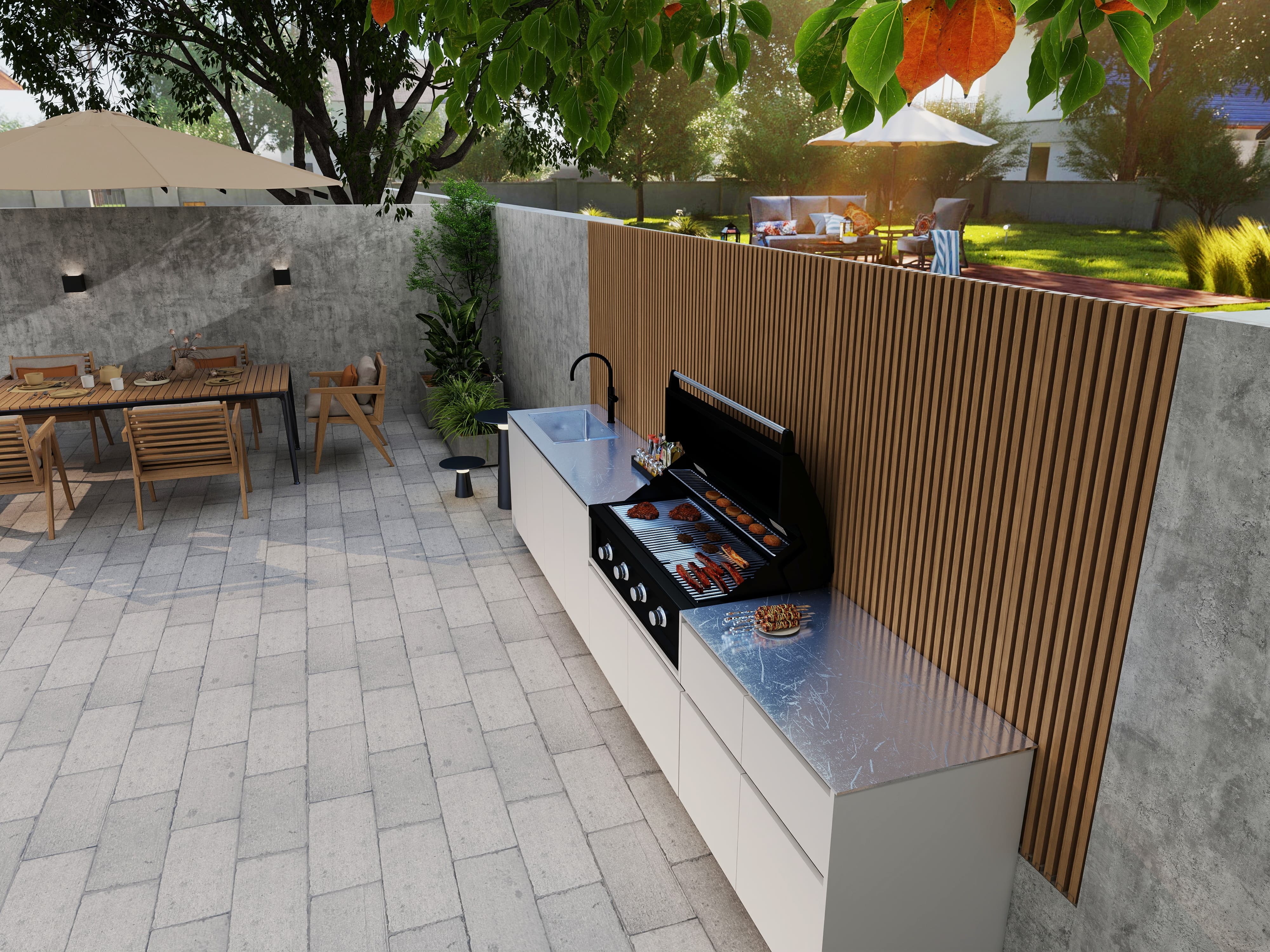
The Factory at a Glance
The Barahton Zhongshan stainless steel factory is located in Zhongshan, Guangdong Province, a city long known as one of China's furniture manufacturing hubs. The facility covers 1,000 to 3,000 square meters and operates five dedicated production lines, supported by a quality control team of five to ten inspectors. With 51 to 100 employees and export business making up 41% to 50% of total sales, the plant is organized around international orders from the loading dock inward: export packing areas, container loading space, and document handling are all part of daily operations rather than special arrangements.
Five production lines running in parallel give the factory a structural advantage: kitchen, bathroom, wardrobe, wine and balcony categories can be processed simultaneously, so a mixed-project order does not have to wait for a single line to free up. For buyers placing container loads with multiple product types, this parallel structure shortens lead time and reduces the risk that one delayed component holds up the entire shipment.
Stage One: Cutting and Panel Preparation
Every cabinet starts as flat stainless steel sheet stock. Incoming sheets are checked for material grade and thickness before entering production, because surface quality and dimensional stability depend on the base material. Cutting is performed on CNC-controlled machines that follow CAD-generated programs, producing panels with consistent dimensions and clean edges. Precise cutting matters twice: first for the appearance of visible edges and seams, and second for the fit of later welding and assembly, where a one-millimeter error compounds across an entire cabinet run.
This stage is also where custom dimensions are absorbed without slowing production. Because cutting patterns come from digital files, a buyer's custom size simply means a different program rather than new tooling, which is why the factory can accept orders starting from single units.
Stage Two: Forming and Welding
Cut panels move to forming, where press brakes bend sheets into frames, door skins and structural profiles. Welding then joins these components into rigid cabinet bodies. Stainless steel welding demands operator skill: heat input must be controlled to avoid distortion, and joints must be ground smooth before painting so the finished surface shows no weld lines. The Barahton cabinet processing equipment and technology at this stage is chosen specifically for thin-gauge metal work, keeping heat-affected zones small and panel faces flat.
Frame integrity is inspected before any surface work begins. Checking welds at this point is far cheaper than discovering a weak joint after painting, and it is one of the reasons the factory keeps inspection staff embedded in the production flow instead of only at final packing.
Stage Three: Surface Treatment
Surface treatment is the stage where Barahton differentiates itself most clearly. The factory runs three finishing directions under one roof. Brushed and mirrored finishes keep the stainless steel visible for industrial looks. Wood grain transfer applies timber textures onto steel through a thermal process, delivering the appearance of oak or walnut without any of wood's swelling or warping. The third direction is the automotive-grade baking paint system: multiple coating passes followed by oven curing, producing hard, color-stable surfaces in gloss and matte options.
Keeping all finishing in-house removes the most common quality risk in metal furniture sourcing: outsourced painting. When paint work leaves the factory, color consistency, curing quality and delivery timing all leave the supplier's control. At the Barahton Zhongshan stainless steel factory, curing ovens and paint booths sit inside the same facility as cutting and welding, so the quality team controls every variable.
Stage Four: Assembly and Component Installation
Painted and finished panels move to assembly, where cabinet bodies receive doors, drawers, hinges, slides and proprietary functional components developed in-house. Stainless steel is heavier and more rigid than wood-based panels, so hardware designed for chipboard often fails on metal cabinets; the factory's internal component development addresses exactly this mismatch. Every assembled unit undergoes function testing: doors open and close to tolerance, drawers run smoothly under load, and alignment gaps stay consistent.
Assembly is also where project-specific features come together, from soft-close mechanisms and integrated lighting to appliance housings and cut-outs for sinks or cooktops. The Barahton stainless steel cabinet production lines treat these features as standard process steps rather than custom exceptions, which keeps lead times predictable on customized orders.
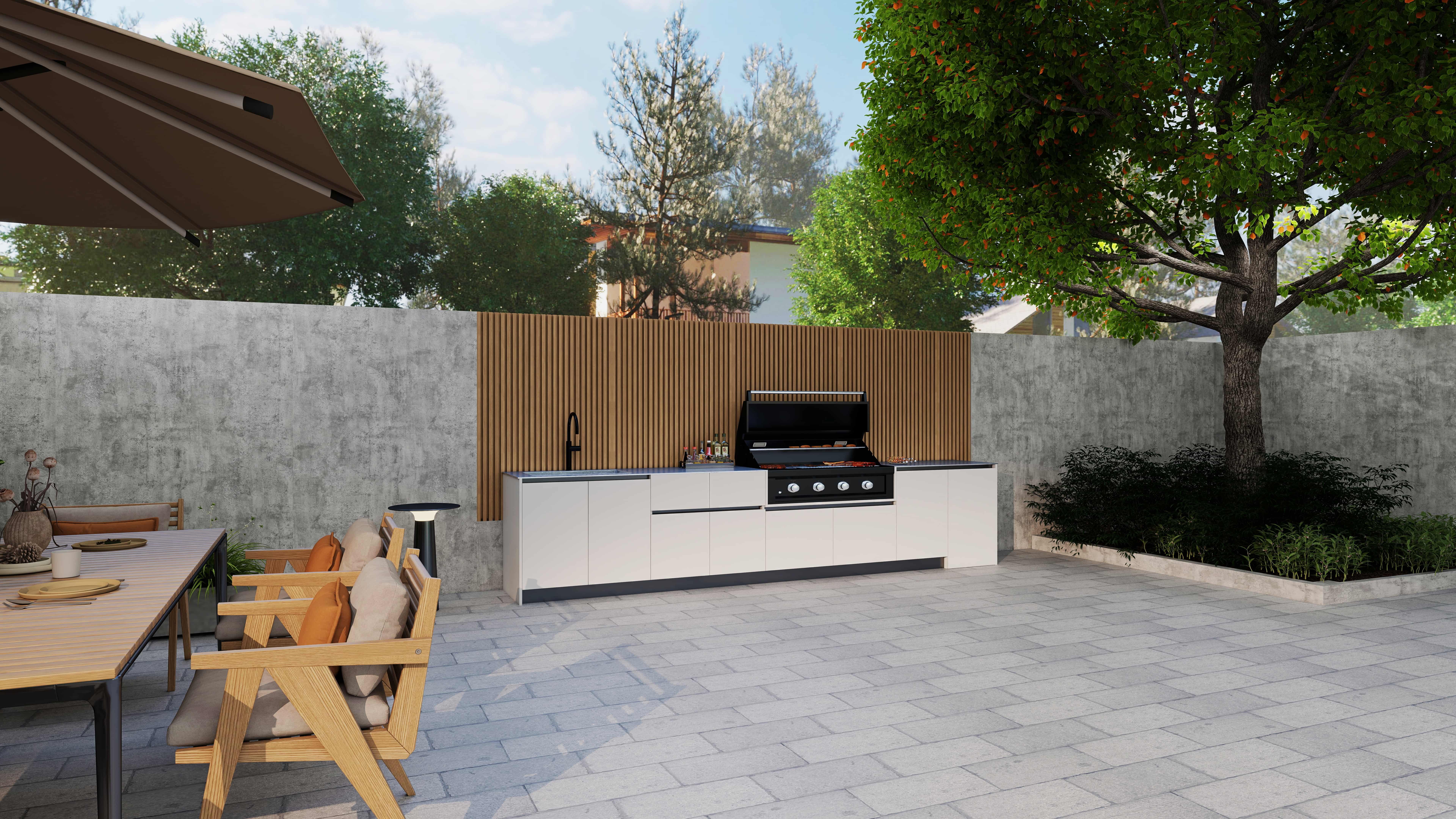
Stage Five: Inspection and Export Packing
Final inspection covers dimensions, surface quality, hardware function and packing readiness. Defects found here are traced back to their production stage for correction, a feedback loop that steadily lowers the escape rate of problems. Approved cabinets are then wrapped with corner protection and moisture-proof materials, a packing standard built from years of container shipments rather than borrowed from wood furniture practice.
Documentation travels with the order: packing lists, inspection records and material information are prepared for each shipment, supporting buyers who need records for their own quality systems or customs procedures.
Production Planning and Order Scheduling
Behind the physical stages sits a planning function that determines whether orders ship on time. Incoming orders are sequenced across the five lines according to material availability, finish type and delivery deadline. Kitchen systems with baked lacquer finishes are grouped around oven availability; wood grain transfer batches are consolidated so texture runs stay consistent; brushed and mirrored orders flow through their own surface path. This sequencing discipline is what allows the factory to quote realistic lead times of one to three months in peak season and about one month off season, rather than optimistic promises that collapse under mixed-order complexity.
For buyers placing repeat orders, the scheduling system also preserves historical records: previous dimensions, finish formulas and hardware configurations are retrievable for exact reorders. A distributor restocking a successful model six months later receives product identical to the first batch, because the production parameters travel with the order history rather than living in individual memory.
Sustainability and Environmental Considerations
Environmental performance has become a specification item, not a marketing footnote. Stainless steel cabinetry carries three structural advantages in this dimension. First, the material is fully recyclable at end of life without downgrading, unlike laminated wood panels that become mixed waste. Second, the production process generates no formaldehyde emissions, because no adhesives or particleboard substrates enter the cabinet at any stage. Third, the long service life of metal furniture means fewer replacement cycles, which is the most overlooked factor in furniture sustainability calculations.
Within the factory, surface treatment systems are designed around controlled curing and contained finishing areas, keeping process emissions managed rather than dispersed. Buyers serving markets with environmental certification requirements can discuss material documentation and recyclability statements during the quotation stage.
What This Means for Buyers
Three practical conclusions emerge from walking through the process. First, in-house surface treatment is the single biggest quality safeguard when sourcing metal cabinets, and Barahton keeps it internal. Second, digital cutting and five parallel lines make small-batch and mixed-category orders economically viable, so distributors can test new models without committing to full containers. Third, embedded QC at every handoff means buyers can rely on factory inspection records even when they cannot visit in person.
Importers evaluating metal cabinet suppliers should ask each candidate the same questions this walkthrough answers: where does surface treatment happen, how are welds inspected before painting, and what hardware is used on metal panels. Suppliers that hesitate on these questions usually outsource their finishing or skip intermediate inspection.
The Human Factor: Skills Behind the Machines
Equipment defines what a factory can do; people define how consistently it does it. Stainless steel fabrication depends on operator skills that take years to develop: welders who control heat input instinctively, press brake operators who anticipate material spring-back, and polishers who judge surface quality by eye and touch. The factory invests in retaining these craftspeople, because in metal furniture production, experienced hands are a quality asset no machine fully replaces.
This human dimension shows up most clearly in finishing. Baked paint application, wood grain transfer alignment and final polishing all contain judgment calls that separate acceptable from exceptional. A workforce that has produced the same product families for years accumulates exactly those judgments, which is one reason established factories deliver more consistent finishing than newer entrants with identical equipment lists.
Planning a Factory Visit
For buyers who want to verify the process firsthand, a structured visit covers five stations: incoming material storage where sheet grades are documented, the cutting and welding area where structural integrity is created, the surface treatment line where finishes are applied and cured, the assembly and function testing zone, and the packing area where export standards are visible. Each station corresponds to a checkpoint described in this article, so visitors can match what they see against the documented process rather than relying on a showroom presentation. Video walkthroughs are available for buyers who need to evaluate the facility before travel, a common first step for new sourcing relationships.
Conclusion
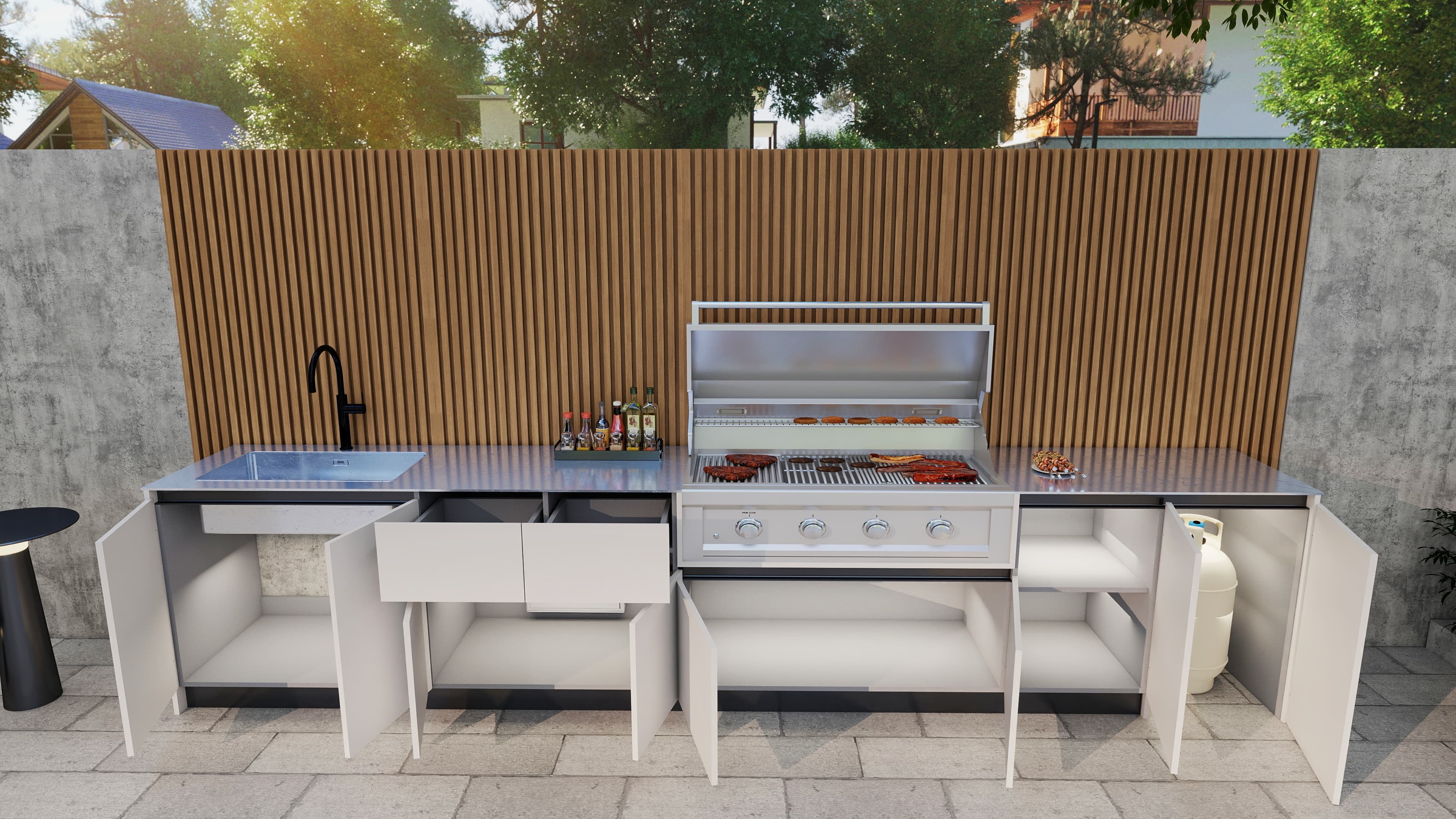
The Barahton stainless steel cabinet production lines demonstrate how a focused mid-size factory converts raw steel into finished cabinetry with consistent quality: CNC cutting, controlled welding, three in-house finishing systems, proprietary hardware and layered inspection all under one roof. The Barahton cabinet processing equipment and technology is chosen for thin-gauge stainless work rather than adapted from wood furniture production, and that specialization shows in the finished product. For buyers who want to see the process themselves, the Barahton Zhongshan stainless steel factory welcomes factory visits and video walkthroughs, letting sourcing teams verify every stage before placing their first order.